Falling in Love with Encaustic: Fire, Wax, and Light
I fell in love with encaustic in 2015. At the time, I was traveling through Arizona and New Mexico, working mainly in acrylics. The lighting and atmosphere there were so intoxicating that I seriously dreamed of one day moving there full time. One afternoon, while wandering through a gallery, I discovered encaustics. Something about the luminous surfaces and layered textures called to me in a way no other medium ever had. Within weeks, I had found a very famous encaustic artist offering side workshops and over the next two years I spent weeks at a time immersed in her studio in the desert, trying to tame this fiery, unpredictable process.
What hooked me from the start was the adrenaline rush: the thrill of creating something so luminous and perfect balanced against the knowledge that one false move, one second of too much heat, and it could all be destroyed. That sense of risk, immediacy, and surrender to the process still keeps me captivated a decade later.
A Brief History of Encaustic
Encaustic painting has ancient roots. The word itself comes from the Greek enkaustikos, meaning “to burn in.” The earliest practitioners were the Greeks and Romans, who used molten beeswax mixed with pigments to create the luminous Fayum mummy portraits that have survived for centuries. The technique nearly disappeared with the rise of tempera and oil painting, only to be revived in the twentieth century by artists seeking both durability and depth.
Modern day pure form encaustics had a resurgence in the 80s. The expense and learning curve are very high. It is a method where pigments are mixed with hot beeswax, allowing artists to apply the mixture to a firm surface. The process involves heating the wax to keep it in a liquid state, which can then be applied using brushes, spatulas or other home made tools. The beeswax is melted and mixed with Demar resin. Once applied, the wax is fused to the surface in thin layers, using heat which creates the very durable and luminous finish. Oil paint, beeswax, mark making, application of heat, and anything in between – unlike other mediums, encaustic is inherently alive. Each stroke, each layer of heat, is fused into the work permanently, giving it an extraordinary longevity—yet the process requires absolute focus in the moment, a conversation with flame and wax that leaves no room for hesitation.
You may have heard of “Cold Wax” which is an entirely different beeswax recipe and process that does not require heat application nor ventilation. It has a certain appeal due to the easier method and cost but lacks the pure luminescence of encaustic work.
My Process: Blowtorch and Hot Palette
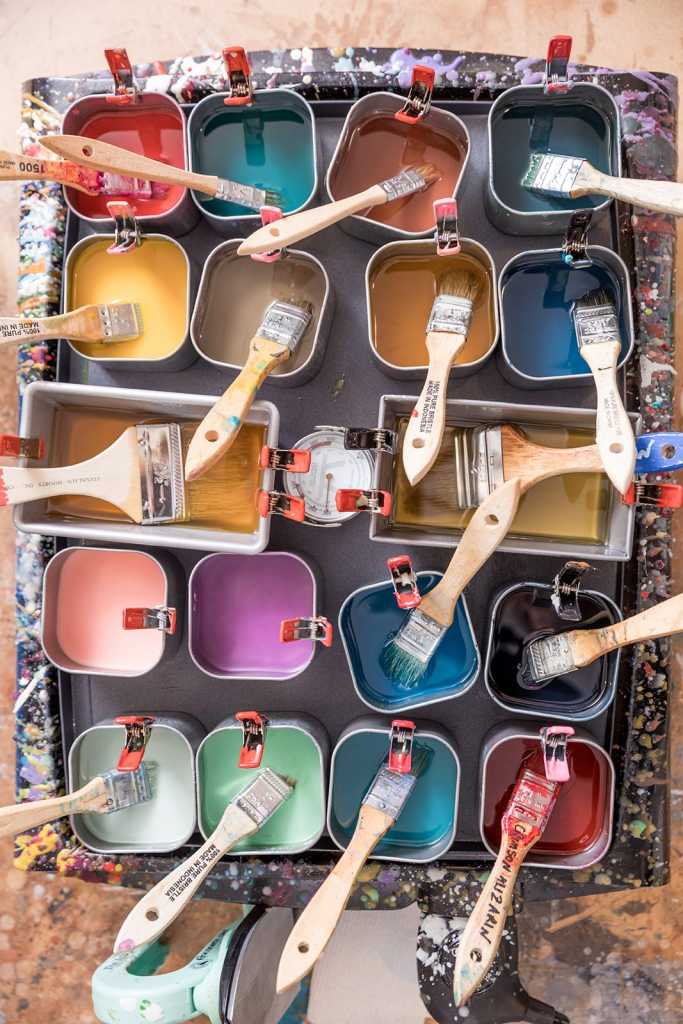
In my own studio, I work with both a blowtorch and a hot palladium palette. The hot palette keeps the beeswax and pigment at just the right molten consistency, ready to brush or pour onto the canvas. The blowtorch is the thrilling part: I use it to perfectly fuse each layer into the next, creating a luminous depth that can’t be achieved with other paints. The wax cools almost instantly, so timing and control are everything.
Sometimes the flame kisses the surface just right, revealing textures that feel almost sculptural; other times, it obliterates what came before, forcing me to begin again. That edge between mastery and chaos is part of what keeps me coming back.
I also bring my own earthy authenticity to the work by incorporating beeswax from my own hives. This adds a layer of intimacy and connection to nature—each piece holds not only my hand but the life of the bees and the land I care for.
Encaustic on the Canadian West Coast
The reality is that in my experience encaustics aren’t as well known or as marketable on the West Coast of Canada as they are in the desert Southwest, where the dry climate and brilliant light seem to lend themselves to the medium. Still, I keep returning to it, especially in the winter months when ventilation and fire restrictions are easier to manage. This winter, I’m looking forward to creating a new series—pushing myself further, refining the process, and sharing more of this beautiful, volatile, ancient medium with my community.
Encaustic may not be the easiest path, but it’s one that continues to light me up, quite literally, every time I pick up the torch.
 The Meadow Art Studio
Leave a comment